
We've been helping Australians for 100 years
As Australia faces more frequent and intense flood events, one local company is rewriting the rulebook on flood preparedness, using cutting-edge technology to help warn emergency services and locals of the dangers of street flooding so we’re not caught out.
Share this story:

FloodMapp, a Brisbane-based start-up and recipient of an NRMA Insurance Help Fund climate-smart innovation grant, is on a mission to save lives. How? By using impact-based modelling software to deliver street-level alerts of flood impact zones to your GPS.
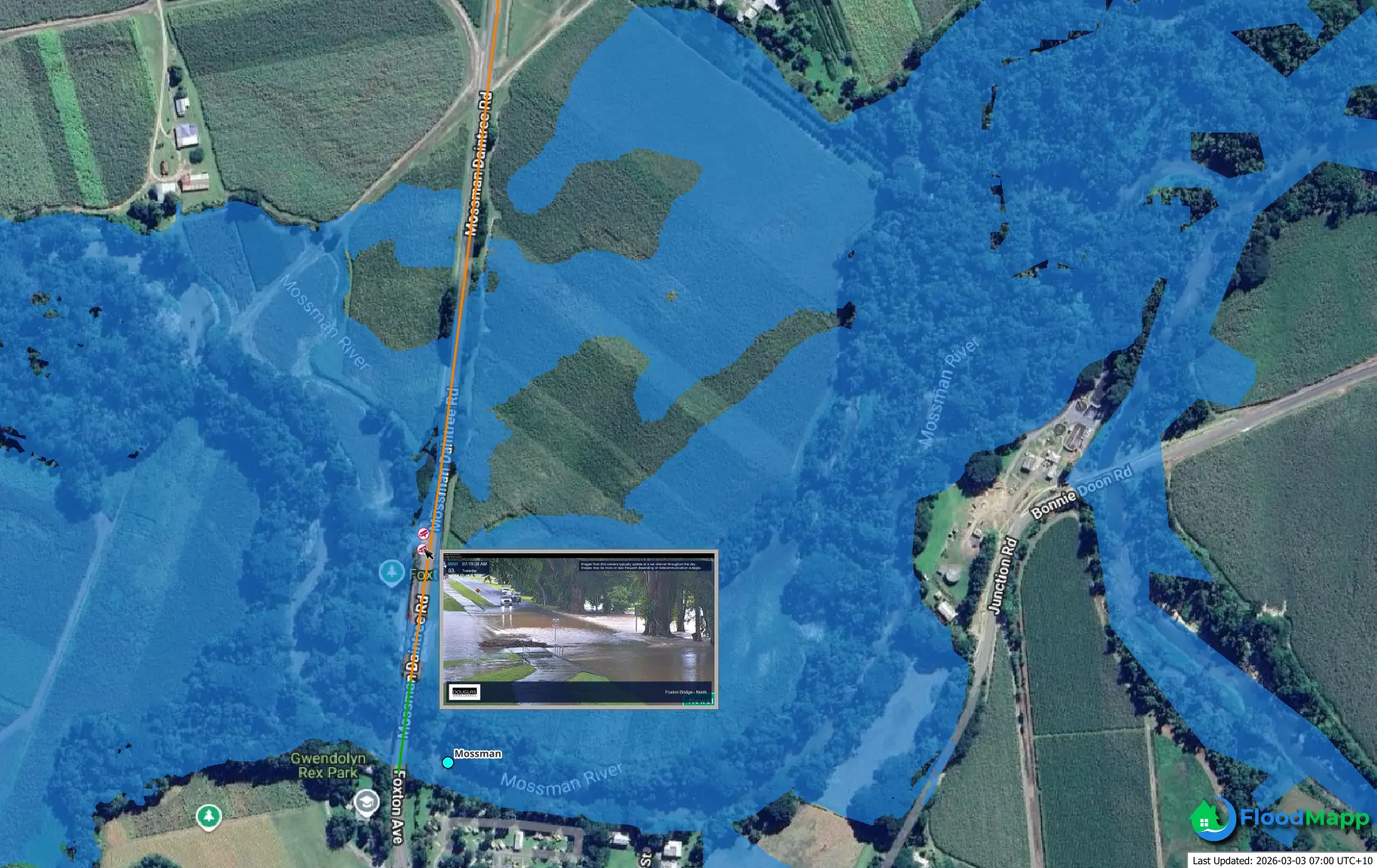
FloodMapp's NowCast product which shows the flood extent
Australia is one of the most climate exposed nations in the world1, with floods considered one of the worst natural hazards when measured by total economic cost and long‑term impact.
Floods can cut off roads, overwhelm emergency services, threaten lives, and cost billions2 each year. These costs could continue to rise as climate extremes continue to worsen. But for one climate tech entrepreneur, the true cost of floods is deeply personal.
Juliette Murphy, previously a water resources engineer, never planned on building a business, but after witnessing friends and family members lose their homes to floods – both in Brisbane in 2011, and two years later in Calgary, Canada - she felt compelled to take action. Floods struck without warning, and the impacts were devastating. Juliette was left wishing there was something she could have done to help. That was when she realised:
"If we have smoke alarms for fire, why don't we have something to warn us about floods? And so, FloodMapp was born."
At the time of its release, FloodMapp was groundbreaking3 technology. Since then, their mission has continued, working tirelessly to help transform how we can predict and respond to floods.
FloodMapp uses a diverse set of validation data, including drone footage, traffic camera footage, high-water marks and satellite imagery, to help predict and warn communities of flood events. This, in turn, can help empower unified awareness, increased preparedness, and improved response and recovery times.
On 2 March 2026, over 200mm of rainfall on the Mossman River catchment caused the Mossman River to surge early Tuesday morning, peaking at 7.14m at 5:20am. This is located in the Douglas Regional Shire Council. When water first began crossing Mossman–Daintree Road around 1am, FloodMapp automatically pushed hazard alerts into Waze and Google Maps, warning drivers that a flooded road may be ahead. As water depth increased, the alert escalated to a road closure, helping keep drivers away from dangerous floodwaters.

Road closure seen in the Waze app
Every flood is different, which is why the use of live predictive data can be so valuable in helping governments and emergency response agencies turn forecasts into action.
“These tools operate at remarkably high resolution, down to 1‑metre level detail.” Says, Murphy. “With this information we can empower emergency services to make faster, safer decisions, where every minute counts.”
There’s no denying the tech’s impact, having delivered intelligence to support the response to the 2021 Logan Albert Catchment in Queensland flood, the 2022 NSW flood events, and more recently, the events in North Queensland, with Cairns, Douglas and Fraser Coast Councils using the technology to support decision-making.
“The need for faster, more precise flood intelligence has never been clearer, and the NRMA Insurance Help Fund’s support has been vital.” - Juliette Murphy
But it’s not just governments and agencies FloodMapp want to empower. It’s everyone.
“We lose lives every year to flooding” laments Murphy. In a flood event, even routine errands can lead to dangerous and unpredictable conditions. “Why do we not have an alert system that can help save lives?”
That’s why getting the technology into more hands is so important to Murphy, and she’s succeeding.
FloodMapp’s flood inundation data is now being seamlessly integrated into existing GPS systems, Google Maps and WAZE. According to Murphy, it helps keep everyone one step ahead with alerts to which areas are most affected so they can stay out of harm's way.
Murphy adds crowd-sourced information is a crucial ingredient in the tool’s accuracy and continued evolution.
“FloodMapp is also interactive, this means everyone can continue to update and help in real time. It’s this ‘citizen science,’ where everyday people share information about road closures and exact flooding locations, which helps fill in the gaps.”
Now, thanks to the NRMA Insurance Help Fund, FloodMapp is working on scaling its technology in a bid to help protect more Australians than ever.

Flooded road using a traffic camera
At NRMA Insurance, we have a long history of helping communities prepare for, recover from and adapt to extreme weather. Over the years, we’ve partnered with community organisations and worked with governments to champion improved disaster resilience. Help Fund reflects our most recent commitment to support climate resilience in Australia.
Help Fund supports emerging climate leaders, community-led resilience projects and innovative solutions focused on helping communities better prepare for the impacts of extreme weather.
To learn more about Help Fund recipients of the grants and other NRMA Insurance initiatives, head to NRMA Insurance Help Fund.
1 Deloitte Access Economics. (2021) Special report: Update to the economic costs of natural disasters in Australia. Australian Business Roundtable for Disaster Resilience and Safer Communities. https://australianbusinessroundtable.com.au/our-research
2 Davis, J. (2025, October 7). New data shows Australia’s extreme weather losses among highest in ABC News. https://www.abc.net.au/news/2025-10-07/ica-finds-australia-extreme-weather-loss-among-highest-in-world/105831772
3 RISE Challenge Winner, FloodMapp, Launches World-First Integration with Waze to Help Drivers. (2022, January 3) News Flash. https://www.norfolk.gov/CivicAlerts.aspx?AID=5878&ARC=11318
Information is current as at the date of publication and may be subject to change. All content on the NRMA Insurance Blog is intended to be general in nature and does not constitute and is not intended to be professional advice. It does not take into account your individual objectives, financial situation or needs. References to third-party organisations, products, services or brands on the NRMA Insurance Blog are for informational purposes only and do not imply any affiliation with or endorsement by NRMA Insurance, unless expressly stated otherwise.