
We've been helping Australians for 100 years
Learning to drive is a big milestone, and sometimes, it can feel pretty stressful. Here are a few helpful tips to help you feel a little less alone, and a little more confident.
Share this story:

I can still remember it. L plates up in my mum’s blue Toyota Corolla, trying to recall which pedal’s the brake and which is the accelerator, pressing my foot down and thinking “wow, this thing feels HEAVY”.
I got started in a local university carpark, largely empty because it was a Sunday, with my dad instructing me to turn, brake, breathe, and repeat, until manoeuvring the car felt more natural. As I attempted to “not brake so harshly” I became acutely aware of how much I was sweating and how much I wished I could fast-forward to when driving would feel easy.
The good news? After 120 hours of supervised driving practice, it did get easier. Every lesson, every mistake I learned from, helped me become a better driver. So now, many years later, here are some pearls of wisdom to help you, dear learner, feel a little better about getting started.
When I first heard this advice I thought, “What do you want me to do? Develop X-ray vision to see through the car in front of me?!”
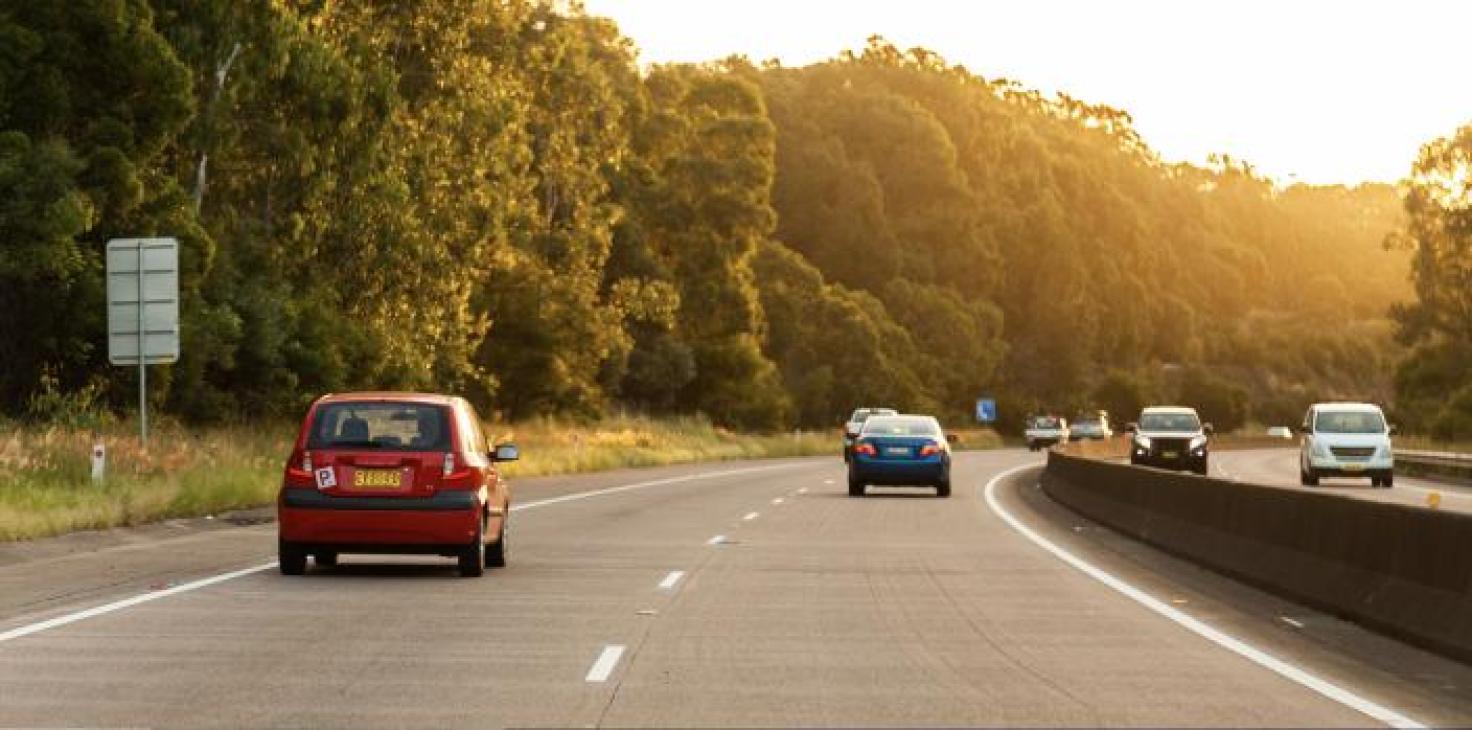
Rather than developing supernatural eyesight, what this phrase actually means is allowing enough space between you and the car in front to be able to scan the lanes around you and read the road ahead. Allowing a safe distance means travelling 3 seconds behind the vehicle in front of you, to allow enough reaction time to help avoid a crash.
So, if you can’t see anything but the car in front of you, that might be your signal to ease off a bit and allow a greater gap.
There are times when eye contact can make all the difference to improving traffic flow and minimising frustration; and I don’t mean the eye-contact you make with the hottie at the bar. This is far more practical.
A key example is merging into another lane in bumper-to-bumper traffic. Along with obeying the road rules and using your indicators, you can attempt to make eye contact with another stationary driver to ensure they can see your indicator and will let you in once traffic moves again. A little nod or wave typically follows, indicating you’re good to slot in.
It might not be quite the same as achieving eye-contact at the bar, but it does provide a warm fuzzy feeling of camaraderie on the road.
New wheels, new storage space? Resist the urge! Beyond packing for road trips or holidays, your car is not a place to store your possessions on an ongoing basis. It’s a no-go for a few reasons:
When it comes to car insurance, everyone’s needs are different. The policy someone else has may not be the same policy you choose, and that’s totally fine. What’s important is understanding what kinds of cover options are available, and what it means for you.
This is true not just for your learning days, but for your Ps and beyond. Unfortunately, there will always be people who are impatient and aggressive on the road. They need to chill and leave earlier next time; but that’s beyond your control. If someone is being aggressive, here’s what you can do:
Remember, if you’re feeling threatened or unsafe, call 000 for an emergency.
Do it all: heavy traffic, light traffic, urban roads, rural roads, in the wet and in the dry. Different weather can change the way you need to drive, and different roads carry different requirements, too. As you journey along in different conditions and locations, remember: there’s no silly questions when you’re learning. Ask what you need, follow instructions carefully, and remember the phrase ‘Practice makes perfect’ is a cliche for a reason.
1 Brooke, L., & Evans, H. (2009). Lighten up! [vehicle weight]. Automotive Engineering International, 117(3).
Information is current as at the date of publication and may be subject to change. All content on the NRMA Insurance Blog is intended to be general in nature and does not constitute and is not intended to be professional advice. It does not take into account your individual objectives, financial situation or needs. References to third-party organisations, products, services or brands on the NRMA Insurance Blog are for informational purposes only and do not imply any affiliation with or endorsement by NRMA Insurance, unless expressly stated otherwise.