
We've been helping Australians for 100 years
NRMA Insurance Help Fund recipient, VALAI — trading as Home Efficiency Australia — are empowering households to help cultivate resilience in their communities.
Share this story:

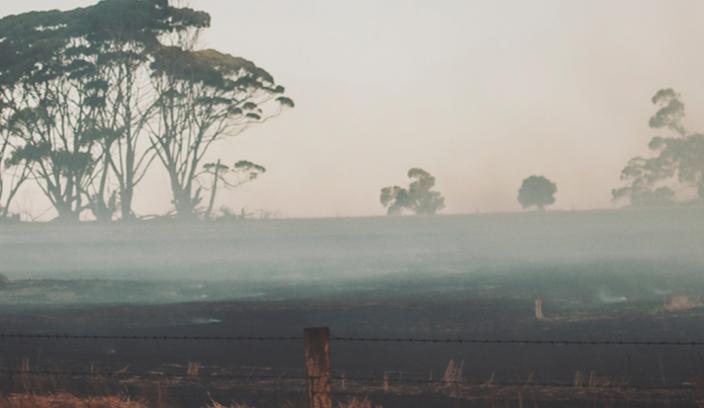
Australia, the ‘wide-brown land’ home to many natural wonders, but prone to extreme conditions. In a preliminary climate summary for 2025, the Bureau of Meteorology reports that the national average temperature for each month in 2025 was above the 1961-1990 average1, with South Australia (SA) and Western Australia (WA) both recording their third-warmest years on record.
Now, chronic water shortages pose a significant challenge to multiple regions, and SA is particularly affected2. Last year, the state recorded the lowest area-averaged rainfall since 2019, that’s around 64% below the December average.
Enter VALAI — trading as Home Efficiency Australia — one of the five recipients of the Help Fund climate-smart innovation grants on a mission to help one million Australian homes unlock their water-saving potential by 2030 with their Water Efficiency Tool, known as ‘WET’.
WET was born in response to the increasingly scarce water supply in the Eyre Peninsula (SA). In a conversation with Jess Taylor, Impact Lead at VALAI, we discovered how the tool is supporting the community and why it’s so important.
“The Eyre Peninsula is a region that’s really struggling, and has been for a while,” Jess reflects, as she explained how Allys Todd, founder of VALAI embarked to extend their climate-tech support to the region.
“Being a country and a community girt by sea, makes us feel like [water] is endless, abundant... but like everything the earth blesses us with, it’s a finite resource.” She explains, as we discuss the attitudes of people toward water and whether we take it for granted.
For Jess, the decision-support tool represents an opportunity to cultivate a movement, indicating a desire to build a more “reciprocal and intimate relationship with water” amongst communities, where we respect water as a “giver of life”, and recognise our responsibility to preserve it.
“Up to 50,000 litres of water could be saved per year with fairly simple upgrades” Jess explains, highlighting how the tool is used to help people determine their home’s water-efficiency score, and what upgrades could help reduce their consumption. “When you compound that over a whole street, a whole community, the whole country... [it’s] pretty significant”.
Altruism and water saving go hand-in-hand, and sometimes, dollar savings do too.
Not only does WET help residents of the Eyre Peninsula understand their water usage, it can help them — and you — work out how much you could save on future water bills, too.
Here’s how it works:
Adopters of the tool in the Eyre Peninsula will also receive tailored insights on what Government rebates may be available to them, as well as be connected with local installers to get the job done.
“The Help Fund has empowered us not only to develop the WET tool but has also enabled the testing of its resonance with a local drought-prone community. This has led to an abundance of valuable insights, learnings, and ideas on how we might amplify our support of local communities around Australia and beyond." Jess shares, reflecting VALAI’s efforts to empower the struggling region to take control of their water use.
Since launching, community uptake has been strong. Local tradies, media outlets, councils, community groups, and social clubs have rallied behind the program, resharing posts, distributing flyers, and encouraging households to explore WET.
It’s exactly what’s needed for the Eyre to help build better water saving habits. And now, VALAI’s Home Efficiency Australia looks to build momentum toward expanding their reach beyond the SA coast, to achieve their goal of making action simple, practical and rewarding for all Australians.
At NRMA Insurance, we have a long history of helping communities prepare for, recover from and adapt to extreme weather. Over the years, we’ve partnered with community organisations and worked with governments to champion improved disaster resilience. Help Fund reflects our most recent commitment to support climate resilience in Australia.
Help Fund supports emerging climate leaders, community-led resilience projects and innovative solutions focused on helping communities better prepare for the impacts of extreme weather.
To learn more about Help Fund recipients of the grants and other NRMA Insurance initiatives, head to NRMA Insurance Help Fund.
1 Australian Bureau of Meteorology (5 January 2026). Annual Climate Statement 2025. https://www.bom.gov.au/climate/current/annual/aus/
2 Australian Bureau of Meteorology (9 January 2026). Drought - Rainfall deficiencies and water availability. https://www.bom.gov.au/climate/drought/
Information is current as at the date of publication and may be subject to change. All content on the NRMA Insurance Blog is intended to be general in nature and does not constitute and is not intended to be professional advice. It does not take into account your individual objectives, financial situation or needs. References to third-party organisations, products, services or brands on the NRMA Insurance Blog are for informational purposes only and do not imply any affiliation with or endorsement by NRMA Insurance, unless expressly stated otherwise.