
We've been helping Australians for 100 years
From licence requirements to lesson plans and insurance, know where to get started with our guide to supervising a learner driver.
Share this story:

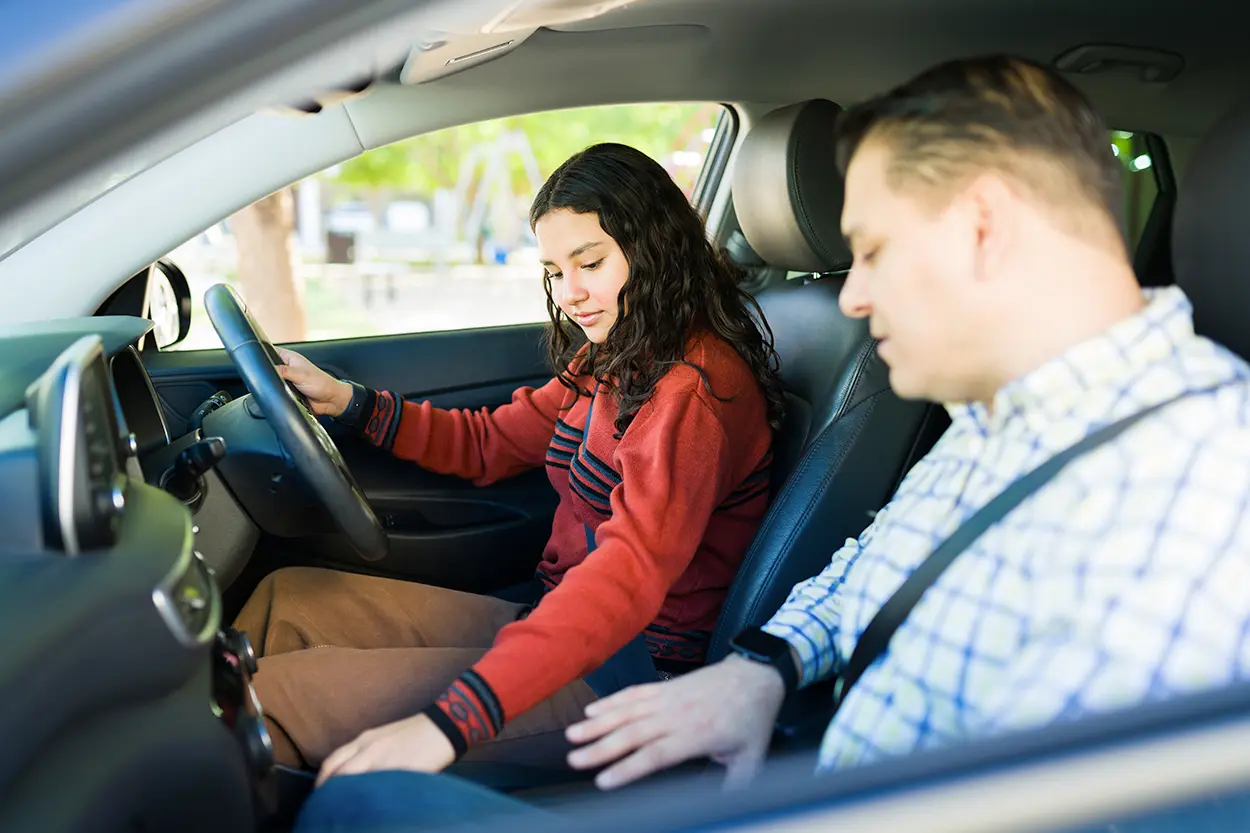
Supervising a learner is an important and rewarding role, but we’re not going to lie — some lessons might leave you sitting white-knuckled and sweating in the passenger seat. So here are our tips to help minimise stress while building your learner’s confidence and ability.
Parents aren’t the only people who can supervise a learner driver; a sibling, friend or licensed driving instructor are also able to teach someone how to drive, as long as they meet the necessary requirements specific to their state/territory.
As a supervising driver, broadly, you’ll need:
A current and full licence is required everywhere (not probationary), but the time you’ve held it for can impact your eligibility to supervise. Here’s a summary of what’s required in each state/territory:
Road rules can be updated as a result of new technologies and road upgrades, so some things may have changed since you got your licence. So no matter where you’re located, it’s important to refresh your understanding of the rules before taking a learner driver out for a lesson.
Get started by downloading or purchasing your state/territory’s handbook for both you and your learner to read:
Most transport and road authority websites also have helpful video tutorials you can watch. These can be especially useful for learning how to master some of the trickier rules and manoeuvres (we’re looking at you, Melbourne hook turns!).
Learning to drive takes time, patience and a good plan. By having a rough outline about what to teach each lesson, you can gradually improve a learner’s confidence, competence and road knowledge without too much overwhelm.
Here are some ideas to help you get started:
This lesson is all about learning what’s what. After all, you don't want to take someone onto the road who can’t distinguish the brake from the accelerator! In this lesson you might like to:
These lessons are about building familiarity with the car and locking down the basics. This is best achieved in a low-traffic area, like an empty car park or quiet side street, to help minimise self-consciousness or pressure from other drivers. In these lessons, consider teaching the learner how to:
Once the learner is comfortable with the basics, venture onto the main roads. At first, avoid peak-hour driving and busy freeways. Instead, opt for quiet roads with low to moderate traffic. In these lessons, consider teaching them how to:
Hopefully by now, your learner is feeling more comfortable behind the wheel and they’re ready to take on some new challenges. Help them practice in different conditions and areas, including driving:
The fundamentals have been taught, new roads have been navigated, and various conditions explored. Now, it’s all about practice, practice, practice. Keep driving, and ensure you:
Remember, no matter how many lessons you’ve had, if things start to feel too overwhelming or stressful for either one of you, find a safe place to pull over to breathe and reset.
You may also consider professional driving lessons or workshops as a complement to your own instruction. Professional instruction has many advantages, including:
Wondering how to cover a learner driver while you’re supervising them? You’re not alone – it's a common question!
How it works can differ depending on the insurer, but with NRMA Car Insurance, you don’t need to list a learner driver on your policy. If a learner driver is involved in a collision in your vehicle while under your supervision and a claim is made under your policy, we base the related excess on your excess.
If a learner driver is the registered owner of the car they’re learning in, then they might consider taking out their own policy. In this situation, they might choose to list you as an additional driver on their policy.
Information is current as at the date of publication and may be subject to change. All content on the NRMA Insurance Blog is intended to be general in nature and does not constitute and is not intended to be professional advice. It does not take into account your individual objectives, financial situation or needs. References to third-party organisations, products, services or brands on the NRMA Insurance Blog are for informational purposes only and do not imply any affiliation with or endorsement by NRMA Insurance, unless expressly stated otherwise.